Saturday, October 1, 2011

gear boxes

 in class we pulled apart and inspected a toyota 4 speed gearbox. the gear box was for a rear wheel drive (north south) engin. the gear case  was in ok condition and had small wear and chips. bolts and threads were in ok condition.
inside the gear box there was a input and out put shaft ,revers idler and driver shaft.
on the driver shaft there were 5 gears that were all part of the shaft  and alwasy spin at the same speed as each other.there were 4 helical cut gears that were  1,2,3 and forth gear. the fith gear was a straigh cut gear and was revers gear . these gears were all in good conditon and so wear the roller bearings inside on the shaft.

out put shaft
the output shaft held the all the gears except forth wich is on the input shaft. the out put shaft also holds two sychro units wich are used to select the gears when changing gears.  these gears were all in good condition ,well lubricated, bearings were good and not lumpy or worn. when i put the gears back together i checked the play and clearinces to see if a spacer or washer  is needed to close the clearinceto reduces play wich can cause extensive wear.

HELLICAL
a hellical cut gear  is a long cut gear wich is alot stronger than a straight cut gear. the hellical cut gear is used manly in forward drive gears (not revers). altough some older gear boxes had first  and sometimes sceond gear with a straight cut gear. this has changed as manifactures have wated to improve durablitiy and overall strength of of the gear boxes.


STRAIGHT CUT
a straight cut gear is a straight tothed gear wich is mostly used in the revers system (driver ,driven and idler) . the problem with straight cut gears is that the weight of the drive is pressed on a small straight surface wich isnt as strong as a long offset cut like a hellical cut. the most common issue with staright cut gears is knocking  a tooth off or shreading teath wich creats excessive noise slippage and further damage.


SYNCRO UNITS
a syncro unit is a system that helps with the selction of gears. inside a sysncro unit is a straight cut gear wich slots into a houseing. two circlips are inserted with 3 small metal spacers locking the spacers in. having these small metal bars alowws the gear housing to slide backwards and forwards selcting the gear needed.the gear inside the houseing slots into teath on the output shaft  wich makes it fixed to the out put shaft.having a faulty syncro unit or a a syncro unti assembeled wrong can make cahnging gears extremly hard if not impossible.

SELECTOR SHAFTS AND SYSTEM
changing gear involves a few diffrent mechanisims. the gear leaver ataches to a selector shaft wich hooks on to sevral other selector shafts wich are attached to the syncros and revers system. on the toyota gear box i did there were 3 selector shafts. there were also 3 tic tacs wich slotted between the selector shafts to prevent selecting to gears at once.

 BEARINGS
the bearings inside the toyota gear box were mostly roller bearings some caged and some like the input shaft into the output shaft were free roller berings (without cage). also there were oil groves were the gears sloted onto on the out put shaft wich act like beaarings as the pump oil in and around the gear to lubricate it. on the gear box i did some bearings needed to be replaced as some rollers were missing and some were lumpy  and worn. the out put shaft ran on a caged roller bearing wich was ok and not lumpy. when re assemberling i lubricated all the bearings to ensure  as little wear as possible.

Thursday, September 22, 2011

things we checked in class

In class  we messured most of the engin parts to check for wear or damage. we checked these messurements with the manifactures specs to see if the part was reusable or had to be replaced.

CAMS
i messured the lobes of the cam and barto see if it was bent or worn. i checked this with a dti gauge
also on the cam we checked the oil clearnce with plasit gauge

journals were visualy inspected for scartches clogs in oil groves so that oil can flow through easy for lubrication.

VALVES
we messure the tickness and lip size of the vlaves to see if it has to much play in the vlave seals and if the valve sits on its seat properly. i messerd this with a micromiter

VLAVE SPRINGS
 i messured the compression of the valve springs  with a valve spring tester. i also checked the springs against a square to see if they were slightly bent and needed to be replaced. a few springs needed to be replaced as they  were not square at all.

PISTON
i messured the oil clearences between the piston rings to see if they were worn and need replacing.also messured the  diamiter of the  piston to see if it had enogh clearince in the boar.

i made sure the con rod was straight and  not bent, worn  or damaged. having a bent or danaged con rod can cause alot of internal problems and make the piston wear against the boar and possibly bend the crank.

CRANK SHAFT
i messured the the journals on the crank to check for ovality  and taper to see if there was enogh oil flow and lubrication to the engin parts. i also checked the oil clearnce with plasti gage to check oil clearnce through the crank

Sunday, September 18, 2011

4 stroke block

the block houses the pistons con rods and crank. the block is wear the combustion happens there for the block is  very strong and usauly made of cast steel. inside the block are boars wich house the piston

PISTONS
 the piston slides up and down the boar buy the rotation of the crank. the rotation of the crank starts of either by a starter moter or a bump start. the piston draws air and fuel into the boar, compresses it, the park plug ignites the air and fuel pushing the piston down creating a rotating motion in the crank to help pump the other pistons up and down. with out the piston it would be impossable to create compression or power. on a 2 stroke some pistons are curved to circulate the air and fuel around the boar instaed of straight out the exhaust. on a 4 stroke standerd pistons have flat tops or small indents so the piston dosnt hit the valve. on performance engins when high revs or a higher octane fuel is used a forged piston can be uesd for exxtra strength so no holes or damge can be don to the piston head. the piston has sevral groves on the side for oil rings. these oil rings help lubricate the boar and piston as it pumps up and down and also stops oil from getting on top of the piston to wear combustion takes place. worn or broken rings creat alot of smoke as oil is being burned with the air and fuel.


GUGEN PIN
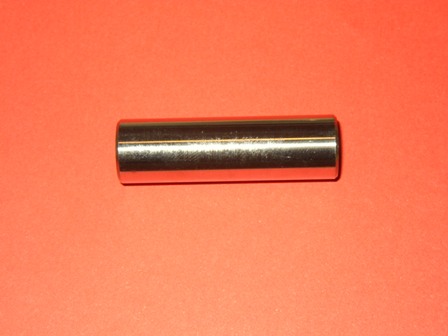
the gugen pin holds the piston to the con rod.  it act like a bearing with help of the oil for lubrication so that the piston can stay straight in the boar and the con rod can rotate with the crank. it is important that the gugen pin is strong as a weak gugen pin can cause alot of damage if it brakes.on a 2 stroke the gugen pin runs on roller bearings as the lubrication is air, fuel and oil. on a 4 stroke it ues oil to lubricate and rotate. with out oil the parts can heat up and melt togeather or sease reacking the engin.


CON ROD
the con rod or connecting rod coneect the gudgen pin and piston to the crank.  the con road connects to the crank by main journals. instead or caged roller bearings in these journals like on a 2 stroke there are oil groves and sleeves wich relei on the oil to lubricate these moving parts. when inspecing the con rods its best to check that they are straight non damged like buring or chipping and havnt been case hardend as this can effect the overall strength.


CRANK
the crank is a vital part of the engin as it truns  up and down movement into rotaing movement wich is transferd onto the fly wheel. the crank is held to the bottme of the block by main journals. these main journals have the same lubricating  system as the journals that hold the con rod to the crank.  the crank holds the kenitic energy  of the piston and  helps pump the other pistons around.  when inspecting the crank i checked the size of journals. if it was bent with a dti gaguge.  the crank was fine with the manifaciures spces.

Wednesday, September 14, 2011

4 stroke engins

HEAD
 the head of the engin holds alot of important componets needed for the combustion process. the head has intake and exhaust ports wich are uesd to feed fuel and air into the boar for compression and exhaust ports wich connect to the exhaust manifold to remove waste fumes after combustion. inorder to let air/fuel and exaust in and out of the engin valves are needed to open and close to seperate and deliver presices amount of mixture for combustion. the valves open and close by being pushed open by a push road system wich has rockers or a rotaing camshaft with cam lobes shaped like a triangle with rounded corners.the cams are driven off the crank shaft by a belt or chain. ensureing the timing of the valves is esensual as valves out of time can cause majoir damage to engin parts.

HEAD CONPONETS

cams: cams are a very important part to a head and the engin. the purpose of the cam is to push down  on the cam bucets to compress the valve spring and open the valve or to push a push rod up into a rocker so the rocker pushes down on the valve to open it. the lobes on the cam are used to open the valves. the lobes are rounded and triangle shape so the valves open and close smothly and not  cause as much wear to the valves or cam buckets. the cams are atached to a cog on either on the out side of the engin or the inside depending on weither its driven by a belt or cahin. the belt or chain then conects to the pulley on the crank so that the valves open at the corret time of the piston stroke. on the cam we messure the cam lobes ,wear and bend in the cam. the cams were between the manifactures specs and were still uesable if the engin was to run again.

VALVE SPRINGS
the purpose of a valve spring is to return the valve after its being compressed either by the cam or rocker. with out a valve spring the valves would stay open and the engin would not run, also the valves could bend causeing damage to the valve seal, piston and sevral other engin conponets. valve springs can come in diffrent materails for special conditions such as titanium for high performance. in our practical we  checked to see if the springs were squar incase they mite be slightly bent witch could indercated further problems. the most the springs were out were .2 mm. we then messured the length of the springs with a vernier to check the length against manifactures specs .  all the valve lengths were between the manifactures specs. we check the length and squarness to ensure that the springs are still doing there job and do not have exstesive wear. short valve springs  may cause less resitance when valve returning or mean extensive wear has taking place. we checked the spring tensioner  to ensure they were compreesing to the right length acording to manifactures spec. doing this can idicated if the valve springs are worn and need replacing to resolve a problem.

VALVES
valves are used to let in air and fuel for combustion and to let out exhaust fumes. some head shave sevral valves per cylinder for more flow there for more power. valves sit in a valve seat wich hold the valve in but still let it have a smoth flow for when the cam or rocker pushes the valve open. the valves  have valve springs locaters seals to seal the spring and on cam shaft  heads have a cam bucket . this set up helps the valve to open and close when needed. in our practical we  messure the valve seats , thickness of valves and inspected the valve for damage or corrosion. all the valves ahd small wear but were still in usable condition and fitted well in the valve seats.

OVERALL HEAD INSPECTION
 overall the head was in a fiarly good condition. most of the componets were within the manifactures specs and only had small wear. although there were a few cam lobes  and springs that were a little over the manifacture specs. the condition of the haed was avrage. it had small warpage. scratches and a tiny bit of chiping on the outside. when assemberling the head  i had to time the cams together and check valve clearences with a fealer gage to manifactur specs. to do the valve clearinces i would have to replace the pads on the valve bucket. the bolts and threads on the head were fine and only a few bolts were missing before pulling apart. bolts were torquid down to half the manifacutres specs as the engin has being pulled about hundreds of times.

Thursday, July 7, 2011

2 stroke part two

ROLLER BEARINGS
 roller bearings are used  in a 2 stroke as the oil is mixed with the fuel  and the ful is the lubricant. useing roller bearings instead of sleaves like a 4 cylinder is composery as they will be longer lasting and wont lock up as a 4 cylinder sleve bearing. roller bearings are caged so that grease or lubricant can be kept inside  the bearing and keep it rolling smoth and efficant for the engin. on a two stroke the caged roller bearings are located on the crank .


SPLIT TYPE BEARINGS
split type bearings are used on  a 2 stroke crank shaft so that the crank and engin can be serviced. they are split from factory and are just cracked and sloted on . not having  a split type bearing will make sericing the engin extremly hard as  you would have to pull apart the crank peice by peice to slide the bearing out.


 PISTON RINGS
the sslots in the side of a piston are for piston rings. the piston rings stop fuel and leaks down the boar past the con rod or piston head. the slots in side the piston ring slots are called locaters and are used to locate the piston rings. the piston rings  must be sloted in right with the ends on the out side of the locater. no doing this can cause leaks ,damage to the boar and make it hard to install the piston.the piston works by sealing the boar, it seals the boar when the engin heats up the metal stretches and so dos the piston rings. one of the piston rings are cut on a diaginal axis so that fuel can go in behime the piston ring and push the piston ring out seal the boar. parts of the piston rings you would messure is grove deepth,side clearince and n and end gap.  the grove depth is the depth of the slot that the piston ring sits in. side clearince is the play that the piston ring has in its slot and the end gap is the distance between the  end of the piston ring tips.


REED VALVE
a reed is locate on the intake manifold  and is a one way valve that works of atmospheric pressure.  the reed valve can be tested by either boling through it or looking through it to see if you can see and day light .


OVALITY AND TAPPER
 ovality and tapper in the boar is  a term used when servicing a engin. to check for this you would use a boar gage and  micromiter. recording data when messering is a  help when resolving the problem. when checking the boar you should mesure top midel and bottem, and 3 places in each section to be acurate. causes of ovality and taper can be due to and offset  piston wearig against the boar. to fix this you would get the boar re boared as part of the service.


2 STROKE 4 STROKE
the difrence between two stroke and four stroke is lubrication, bearings  and cams. in a 4 stroke the engin has a sump and the oil is seperated from the fuel. in a 2 stroke the oil and fuel is mixed also causeing the diffrences between bearings. in a two stroke the valves are on the side and dont usauly have over head cams. in a 4 stroke there are allways over head cams and some times DOCH wich are double over head cams. also 2 stroke piston heads are curved and shaped so that the fuel can circulate around the top of the head and not straight out the exaust port. on a 4 stroke the pistons are  flat although some are ajusted to suit valve clearices.


response on blogger

i found the blog easy and very helpfully as it alowed me to get more information and  advice from difrent sorce on the internet. blogger is a handey tool and helped me with my studies

Monday, June 27, 2011

2 stroke engins

HOW DOSE A TWO STROKE ENGIN WORK?
a two cycle works alot diffrently to a 4 stroke system as the combustion happens through the whole block and the fuel and oil are mixed. a 2 stroke cycle works by drawing the fuel in through the inlet valve  and in to the crank casinging, on its down force the fuel is forced around the blosk and into the top of the block, the piston pushes back up compressing the fuel, the spark plug ignites the fuel sending the  piston on its down stroke and forcing the exhaust fumes out through the exhaust port. unlike a four stroke the oil stays in the sump and crank case to keep the  piston and cylinders lubricated, the fuel and air mix is let into the top of the boar by valves wich is then compressed and ignited by the spark plug. below the piston fuel and air is used to lubricate the crank and bearings, above the piston is were the combression and power comes from as it is were the fuel is ignited by the spark plug.  scavenging is  the revolution of the two stroke using the beginning of the compression stroke and the end of the combustion stroke.


BEARINGS
 special types of bearings need to be used in a two stroke  as using the same ones as a four stroke will seas becasue the oil is mixed with the fuel in a two stroke and needs a more inderpenit bearing. roller bearings and  closed case ball bearings are used as they are self lubricated and can circulate easy with out the need of oil to lubricate them.